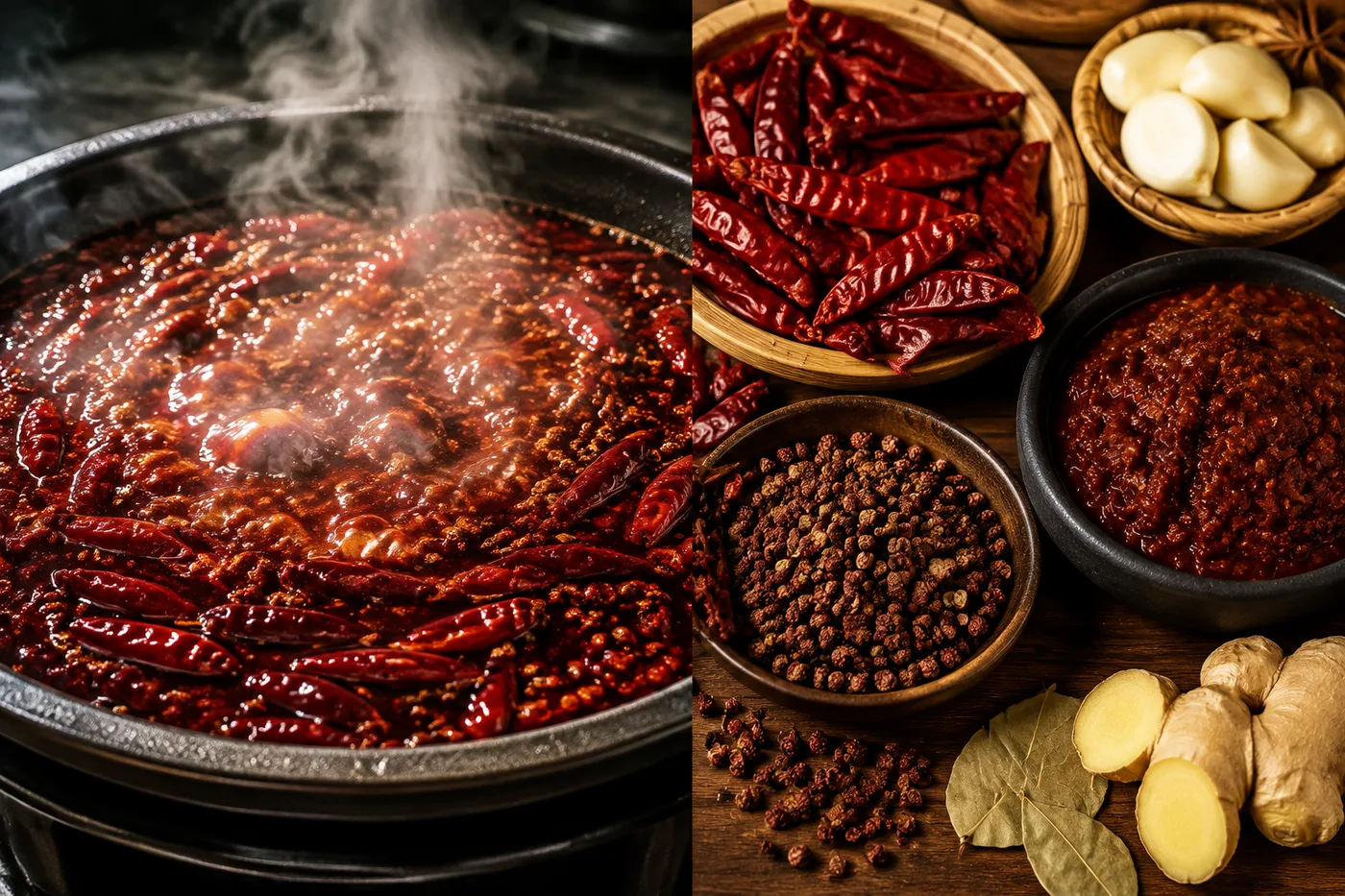
Walking into a Chinese hot pot restaurant for the first time without any Chinese language skills can be disorienting. The menus are often picture-based but not always. The ordering flow is different from Western restaurants. The table setup can be confusing. And the spice level conversation is critical to get right before anything hits the pot.
This guide covers everything from walking in to paying the bill.
Step 1: Choose Your Restaurant Type
Not all hot pot restaurants are the same, and the ordering experience varies by type:
Chain restaurants (Haidilao, Xiaolongkan, Banu, Da Long Yi): More tourist-friendly. English menus or menu apps available at many locations. Staff often speak basic English. QR code ordering is common. These are the easiest starting point.
Local neighborhood restaurants: Cheaper, more authentic, no English menus. Ordering requires either basic Chinese, a translation app (Google Translate camera mode works well), or a Chinese-speaking companion. Worth the extra effort for the experience.
Specialty style restaurants: Chaoshan beef hot pot, Beijing copper pot, coconut chicken — each style has dedicated restaurant chains. Look up the style before you go so you know what to expect from the menu structure.
Step 2: The Broth Decision (Most Important)
Before anything else, choose your broth. The server will ask immediately upon seating.
The most common setup in Sichuan/Chongqing-style restaurants is the 鸳鸯锅 (yuānyāng guō) — the yin-yang split pot with two compartments. One side is mala (spicy), one side is mild (clear bone broth or tomato). This is the recommended choice for groups with mixed spice tolerance.
Spice level for the mala side: If asked, the options are usually:
- 微辣 (wēi là) — slightly spicy. Appropriate for most non-spicy-food eaters
- 中辣 (zhōng là) — medium. Standard for locals who want some heat
- 重辣 / 特辣 (chóng/tè là) — heavy/very spicy. For experienced heat lovers only
- 变态辣 (biàntài là) — literally "abnormal spicy." This is real. Do not order this on your first visit.
If you are not sure, order 微辣 on the mala side. You can always order the ingredients to the mild side.
Step 3: Understanding the Menu Structure
Hot pot menus are typically organized in this order:
- Broth selection — already done at the start
- Premium/signature ingredients — highlighted, often more expensive. Usually includes fresh maodu, premium beef cuts, live seafood
- Meats and offal — the core section. Beef slices (肥牛), lamb slices (肥羊), duck intestine (鸭肠), tripe (毛肚), tendon (蹄筋)
- Seafood and fish balls — shrimp, crab sticks, fish tofu, squid
- Vegetables and tofu — napa cabbage, enoki mushroom, lotus root, potato, various tofus
- Noodles and starches — sweet potato noodles, glass noodles, rice, instant noodles
- Drinks and desserts
For a first visit, order across categories: 2-3 meat items, 1-2 offal (at least try maodu), 3-4 vegetable/tofu items, and noodles for the end. Do not over-order — the meat especially is more filling than it looks when raw.
Step 4: Quantity and Portions
Standard portions at most hot pot restaurants are sized for one person as a single item. For two people, you would typically order 8-12 dishes total. Over-ordering is extremely common for first-timers.
A reasonable order for two people:
- 2 meat dishes (beef + one other)
- 1 offal (maodu or duck intestine)
- 1 seafood or fish ball dish
- 3-4 vegetable/tofu dishes
- 1 noodle dish
Many restaurants in China allow you to order in rounds — you do not have to order everything at once. Ask "可以分开点吗?" (Can we order in rounds?) at the start.
Step 5: The Dipping Sauce Station
Most self-service hot pot restaurants have a condiment station with 15-20 ingredients. You build your sauce yourself in a small bowl. The essentials to look for:
- Sesame paste (芝麻酱) — the base
- Garlic (蒜泥) — minced, mandatory
- Chili oil (辣椒油)
- Sesame oil (香油)
- Soy sauce (酱油)
- Oyster sauce (蚝油)
- Fermented tofu (腐乳) — optional, Beijing-style
- Fresh cilantro (香菜), green onion (葱花)
At Haidilao, staff will often build your sauce for you if you request it — just describe your spice preference.
Step 6: Service and Cooking Help
In China, hot pot restaurants often provide active table service during cooking:
- Staff will skim the foam that forms on the broth surface — let them do it
- At Chaoshan beef hot pot restaurants, the server will often cook the beef for you — watch them and match the timing
- Broth top-ups are automatic at most restaurants — wave a server when the level drops
- At Haidilao specifically, unlimited snacks and drinks (watermelon, nuts, drinks) are available while waiting for a table
Step 7: Paying the Bill
In China, the bill (买单, mǎi dān) is almost always paid by one person — splitting the bill at the table is uncommon and considered slightly awkward. If you are with Chinese friends, expect a polite fight over who pays. As a foreign visitor, offering to pay is always appreciated even if refused.
Payment is by WeChat Pay or Alipay at virtually all restaurants. Cash is accepted but increasingly unusual. Some tourist-focused restaurants accept international credit cards.
QR code scanning at the table for self-ordering and payment is standard at chain restaurants — you may not need to interact with a server at all for the order.
Useful Phrases
| English | Chinese | Pinyin |
|---|---|---|
| Table for [number] | [X]位 | [X] wèi |
| Slightly spicy please | 微辣 | wēi là |
| Not spicy / no spice | 不辣 | bù là |
| Can I have the menu? | 菜单 | càidān |
| What is this? | 这是什么? | zhè shì shénme? |
| Bill please | 买单 | mǎi dān |
| More broth please | 加汤 | jiā tāng |
Frequently Asked Questions
For popular chains like Haidilao, absolutely. Waits of 1-3 hours without a reservation are common at prime dinner hours. Reserve through the restaurant's app or WeChat mini-program. Smaller local restaurants rarely take reservations — arrive early or be prepared to wait.
Vegetarian hot pot is available but requires specific research. Ask for "素锅" (vegetarian broth) and order from the vegetable/tofu section only. Cross-contamination is possible in shared pot restaurants. Gluten-free is very difficult as soy sauce is present everywhere. Halal hot pot restaurants (清真) exist in most major cities and serve beef/lamb without pork products.
For first-timers, yes — the service is genuinely exceptional, the food quality is consistent, and the English-language support makes the ordering experience much easier. For seasoned hot pot eaters, local restaurants in Chengdu and Chongqing are often better for authenticity and flavor, at a fraction of the price.
Decode any menu item instantly: