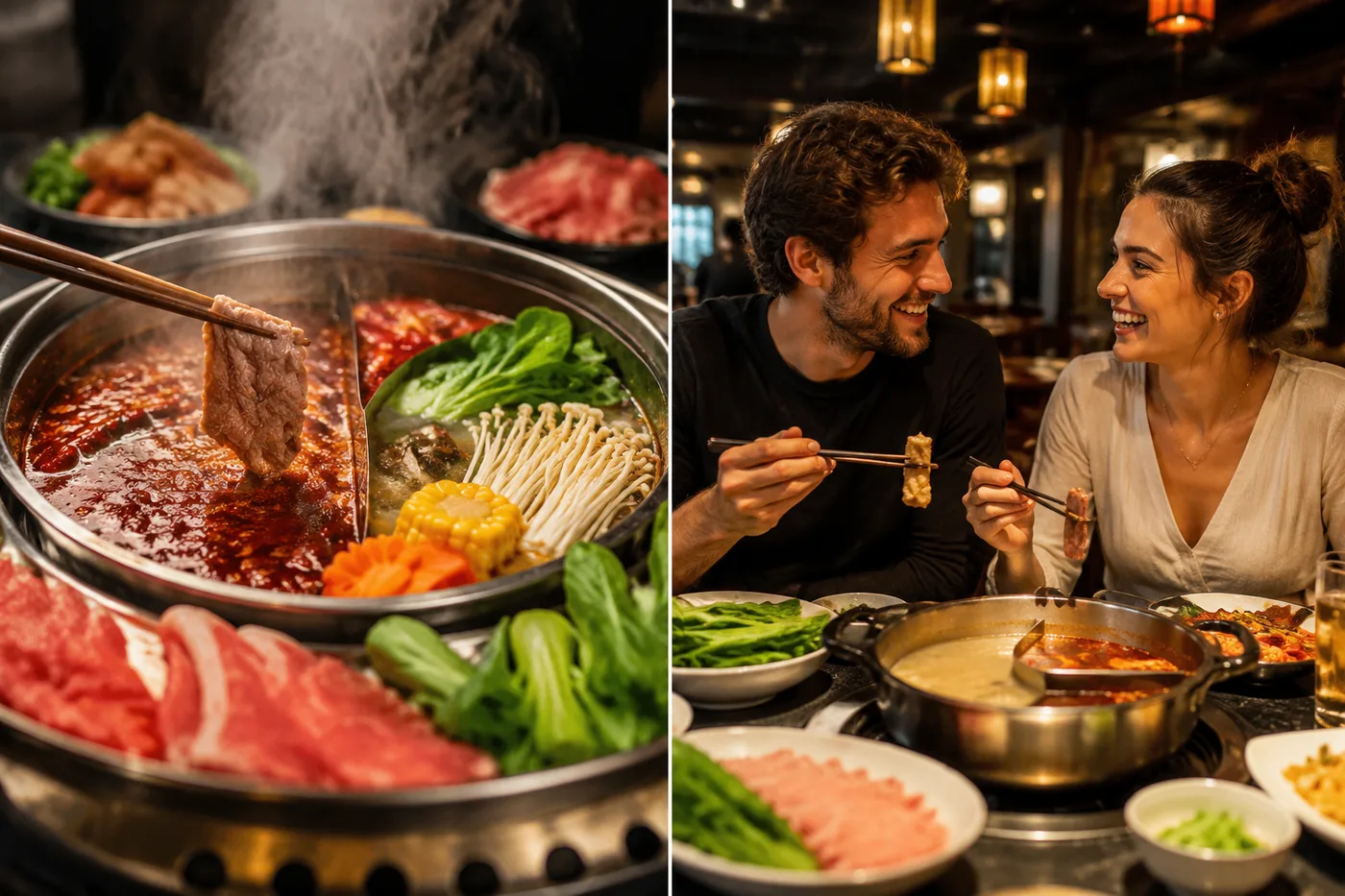
Hot pot can be gluten-free, but a pot of plain meat and vegetables is not automatically safe. Wheat can appear in soy sauce, broth concentrate, chili-bean paste, fish balls, dumpling wrappers, imitation seafood, and the sauce bar. A shared pot also creates cross-contact when wheat noodles and gluten-free food cook together. The solution is not guesswork: verify packaged ingredients, control the broth and utensils, and make a clear plan before anyone starts cooking.
Start With the Meaning of Gluten-Free
People avoid gluten for different reasons. Celiac disease requires strict avoidance of gluten and cross-contact. A diagnosed wheat allergy can involve different proteins and may require avoiding wheat even when a product meets a gluten threshold. Non-celiac gluten sensitivity is another situation. Restaurant staff need the practical requirement, not only the phrase “I do not eat bread.”
Explain that wheat, barley, and rye are not safe and that shared broth matters. If the restaurant cannot verify ingredients or prevent cross-contact, choose another meal. The diet checker can prepare questions, but it cannot certify a kitchen or replace medical guidance.
Soy Sauce Is the Most Common Hidden Source
Many Chinese soy sauces, jiàng yóu (酱油), are brewed with wheat. A bottle that looks like plain soy sauce may therefore contain gluten even though soybeans are naturally gluten-free. Dark soy, seasoned soy, oyster sauce, teriyaki-style sauces, and restaurant blends also need individual verification.
Use a product clearly labeled gluten-free. Tamari is often made with little or no wheat, but “tamari” alone is not a guarantee; read the certification and ingredient panel. Keep the bottle separate at a shared sauce station and use a clean spoon. A splash from a regular soy ladle can contaminate an otherwise safe bowl.
Packaged Broth Bases Need Full Label Checks
Premade hot pot base, huǒ guō dǐ liào (火锅底料), may contain wheat flour, wheat starch, regular soy sauce, malt-derived ingredients, or flavor blends whose sources are unclear. Mala base can also include doubanjiang, dòu bàn jiàng (豆瓣酱), and some commercial versions contain wheat. Tomato and mushroom pictures on a packet say nothing about gluten status.
At home, choose a broth base explicitly labeled gluten-free or make stock from identifiable ingredients. A simple clear-bone broth can use bones, ginger, scallion, radish, salt, and verified gluten-free tamari. A mushroom broth can use dried shiitake, fresh mushrooms, ginger, kombu, and salt. Check stock cubes and miso separately; recipes and factories vary.
Fish Balls, Meatballs, and Processed Items
Fish balls, beef balls, shrimp paste, imitation crab, stuffed tofu, and luncheon meat often use starch for binding or texture. That starch may be wheat, potato, tapioca, corn, or a blend. A traditional recipe is not proof of what a factory used. Buy sealed products with a gluten-free statement rather than relying on a freezer-bin sign.
Plain, unseasoned slices of fresh beef, lamb, pork, chicken, fish, and whole shrimp are easier to verify. Marinated meats need checking because soy sauce or seasoning powder may contain wheat. At a restaurant, ask for an unopened label when possible. If staff cannot identify the binder, skip the processed item.
Tofu, Tofu Skin, and Vegetables
Plain tofu and tofu skin, also called yuba or fǔ zhú (腐竹), are usually made from soybeans and water and are naturally gluten-free. Fried tofu puffs, flavored tofu, and mock meats are less predictable. Fryers may be shared with battered foods, and mock gluten products can be made intentionally from wheat protein.
Fresh vegetables, mushrooms, plain potatoes, corn, lotus root, and rice cakes made only from rice are straightforward choices. Wash produce and use clean boards and knives. Sauce-coated vegetables, frozen mixed packs, and stuffed mushrooms require label checks. “Vegetarian” and “gluten-free” answer different questions.
Noodles: Know the Starch
- Glass noodles: commonly made from mung bean, pea, potato, or sweet potato starch and often gluten-free, but verify the package.
- Rice noodles: often rice and water, though blended or seasoned products can add wheat.
- Sweet potato noodles: frequently gluten-free when made from sweet potato starch, but labels vary.
- Konjac noodles: commonly gluten-free, with possible added ingredients.
- Udon: wheat noodles and not gluten-free.
- Ramen and wheat noodles: not gluten-free unless specifically formulated and labeled that way.
- Dumplings: ordinary wrappers are wheat-based even when the filling is safe.
Do not cook wheat udon on one side of a divided pot and call the other side gluten-free if broth can splash or utensils cross the divider. For celiac-level separation, use a distinct pot, burner, ladle, strainer, and eating utensils.
A Safe Home Setup
- Clean the table, pot, boards, knives, strainers, and sauce bowls before preparation.
- Choose broth and packaged ingredients with clear gluten-free labels.
- Keep regular soy sauce and wheat noodles out of the meal, not merely across the table.
- Serve plain raw proteins on separate trays and avoid unverified marinades.
- Give the gluten-free diner a dedicated ladle, chopsticks, sauce spoon, and plate.
- Retain labels until the meal is finished.
The substitute finder can suggest rice, glass, or sweet potato noodles when a recipe calls for udon. Confirm the replacement package because a category-level suggestion cannot account for every factory.
How to Order at a Restaurant
Call ahead during a quiet hour. Ask whether the broth contains regular soy sauce, wheat starch, a base packet, doubanjiang, or stock powder. Ask whether meat is marinated, what binds the fish balls, and whether separate cookware is possible. “No noodles” is not enough.
At the table, request sealed gluten-free tamari if available or bring a permitted personal packet. Choose plain vegetables and unseasoned meats. Decline the communal sauce bar if spoons move between containers. If wheat noodles are important to other diners, a separate pot is the safest arrangement. Staff honesty about uncertainty is more valuable than a confident but unsupported yes.
A Simple Gluten-Free Menu
For four people, serve homemade mushroom or clear broth, plain sliced beef, whole shrimp, firm tofu, napa cabbage, bok choy, shiitake, lotus root, and verified glass noodles. Mix a sauce from labeled gluten-free tamari, rice vinegar, sesame oil, garlic, and scallion. Check sesame and soy needs separately from gluten.
This menu still feels like hot pot because variety, timing, and communal cooking remain intact. The essential habit is verification: ingredients that are naturally gluten-free can acquire wheat through seasoning, processing, or a shared pot. Build the meal from labels and clear procedures, not assumptions.