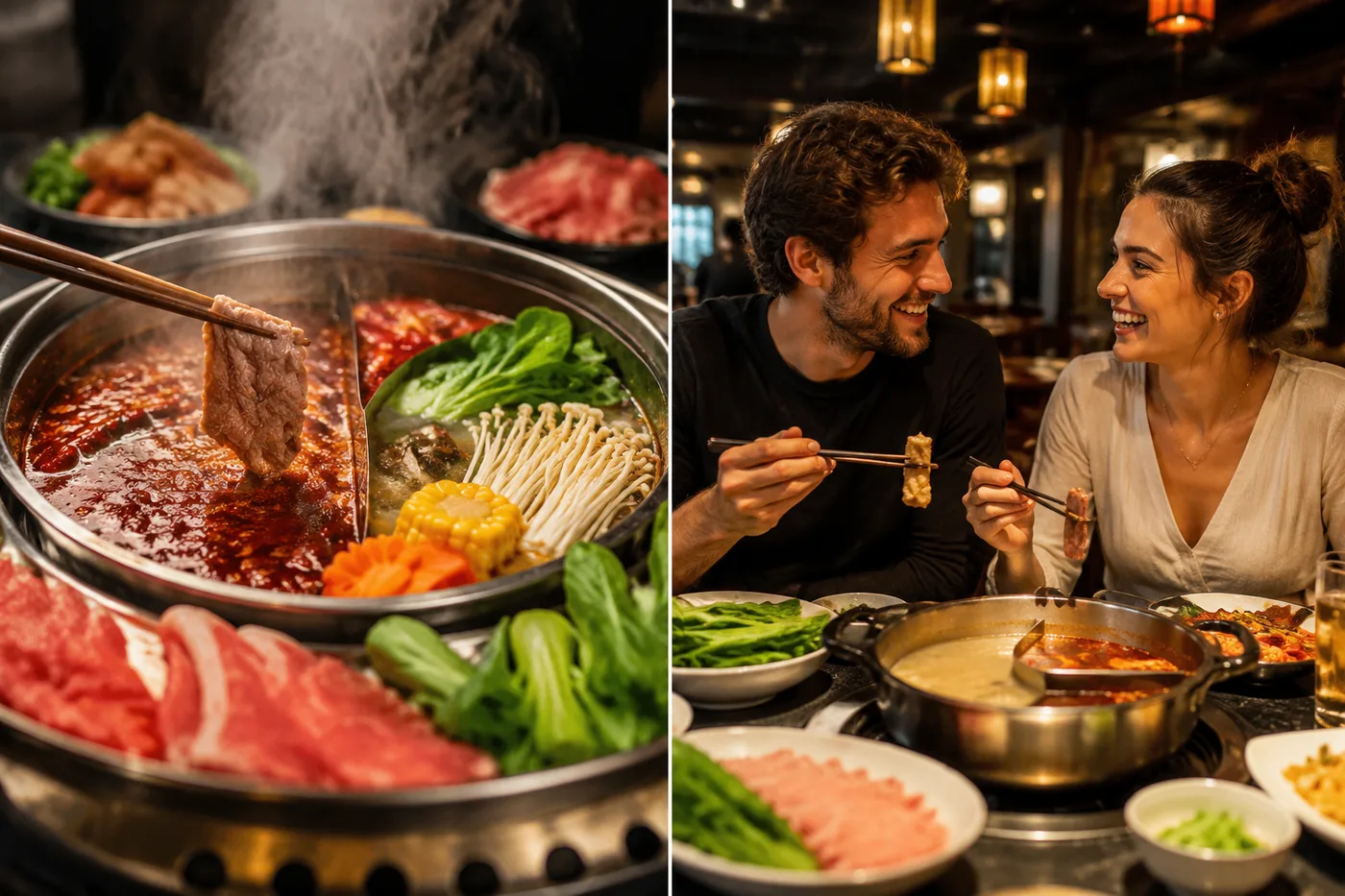
A four-person hot pot can cost about $100–$150 at a mid-range U.S. restaurant or roughly $36–$50 at home before equipment. The difference is real, but neither number is universal. City, tax, tip, seafood, drinks, delivery fees, and appetite change the total quickly. A useful budget compares the same meal: one broth, two proteins, vegetables, tofu, noodles, and sauce for four adults.
What a Restaurant Hot Pot Bill Includes
Many restaurants charge for broth first, then price every plate separately. A practical mid-range estimate is $20–$35 per person before tax and tip. Four diners therefore start around $80–$140 in food. Add tax, an appropriate local tip, soft drinks, or alcohol, and a final bill around $100–$150 is unsurprising.
The restaurant price pays for more than ingredients. Staff prepare thin meat, maintain burners, refill broth, wash many sauce dishes, manage ventilation, and carry inventory that a household would never stock. There is also no leftover prep or kitchen cleanup. Use the cost calculator with prices from your own city instead of treating a national range as a quote.
A $36 Home Shopping List for Four
- Thin beef slices: about $12 for 500–600 grams
- Shrimp: about $8 for 450 grams
- Vegetables and mushrooms: about $6 for napa cabbage, greens, and mushrooms
- Broth base: about $3 for a packet, or a similar amount for simple aromatics
- Noodles: about $2 for one shared package
- Sauce ingredients: about $5 for sesame paste, soy sauce, vinegar, garlic, and scallion
Total: approximately $36, or $9 per person. These are plausible U.S. discount or Asian-market prices, not guaranteed current prices. In a high-cost city, premium shrimp and ribeye can lift the basket above $50. Pantry soy sauce and vinegar may reduce the first night’s receipt, but count the portion used rather than pretending pantry food is free.
How Much Food That Actually Provides
The list supplies roughly 240–260 grams of meat and seafood per person before vegetables, mushrooms, sauce, and noodles. That is generous for a mixed hot pot. A household can lower cost further by using one protein, adding firm tofu, and increasing napa cabbage or seasonal greens. The hot pot builder helps scale quantities so savings do not disappear into excessive leftovers.
Do not buy ten separate ingredients just to make the table look like a restaurant photo. Two proteins, three vegetables or mushrooms, one tofu, and one starch create enough contrast. One unfamiliar specialty is more memorable than five half-used freezer bags.
The $60 Equipment Question
A simple induction burner and compatible pot can cost around $60 together. If you use them for ten hot pot nights, that is $6 per session, or $1.50 per person for a table of four. At twenty sessions, the allocation falls to $3 per night. This is amortization, not a promise that the equipment lasts only ten uses.
Check your kitchen before buying anything. A portable induction burner may already pair with a wide magnetic stainless-steel pot. An electric skillet can work if it safely maintains a simmer and the cord reaches without creating a trip hazard. Do not use an extension setup that violates the appliance instructions. The starter-kit planner separates essential equipment from attractive extras.
Home Costs People Forget
Electricity for one evening is modest, but transport, delivery fees, paper towels, dishwashing, and food storage are real. Time matters too: shopping, washing vegetables, slicing, setting the table, and cleaning may take 60–90 minutes. Home still wins on cash for many groups, but a restaurant may win when time, ventilation, or limited space matters more.
Waste is the biggest avoidable cost. Freeze unused raw sliced meat promptly if it remained cold and safe, store unopened balls according to the package, and buy vegetables that fit another meal. Do not save money by keeping food that sat warm beside a communal raw-meat tray.
How to Keep the Home Meal Under $40
- Shop at one Asian market. Hot pot cuts, tofu products, noodles, and broth are often grouped together.
- Choose one premium item. Buy good beef or shrimp, not both, when prices are high.
- Use value proteins. Firm tofu, eggs, fish balls, or pork shoulder can replace part of a costly beef order.
- Buy seasonal vegetables. Napa cabbage, mushrooms, and one green are enough.
- Make a pantry sauce. Sesame paste, soy, vinegar, garlic, and scallion cover the basics.
- Finish with noodles. One $2 package turns the seasoned broth into the final course.
A homemade broth can be economical when stock ingredients are already available, but a $3 base packet is often cheaper than buying several aromatics solely for one evening. Compare labels for sodium, allergens, beef tallow, and serving size. A packet that requires two units is not a $3 solution.
How to Get Better Value at a Restaurant
Set the order before hunger takes over. Choose one broth or a divided pot only if the second flavor matters. Order core vegetables and tofu, then one standard beef and one seafood or ball plate. Wait until those arrive before adding more. Restaurants make it easy to order duplicates because plates look small when raw.
Skip premium wagyu upgrades unless marbling is the purpose of the meal. A standard sliced-beef plate often provides better value once it is dipped in a strongly seasoned broth. Alcohol and specialty drinks can add $20–$40 to a table quickly; water or tea keeps the comparison focused on food. Use loyalty offers only when they do not encourage an unnecessary order.
Restaurant Versus Home: The Honest Break-Even
Suppose the restaurant total is $120 and the first home night costs $36 in food plus $60 in equipment: home costs $96 and already saves $24, assuming no delivery fees or unused groceries. The second comparable home meal needs only food, making the cumulative saving much larger. If equipment is already owned, home can cost roughly one third of the restaurant bill.
That arithmetic does not make restaurants poor value. They offer choice, skilled slicing, sauce bars, ventilation, service, and no cleanup. Home is the budget winner when the group is happy with a focused menu and will reuse the equipment. The detailed at-home guide helps plan the logistics that the price comparison leaves out.
A Budget That Still Feels Generous
Spend visibly: arrange vegetables on platters, separate proteins, mix sauces in individual bowls, and keep extra hot broth ready. Abundance comes from color and variety, not from buying the most expensive cut. The $36 example is a framework: update each line with local receipts, protect the protein budget, and stop ordering when the planned spread is complete.