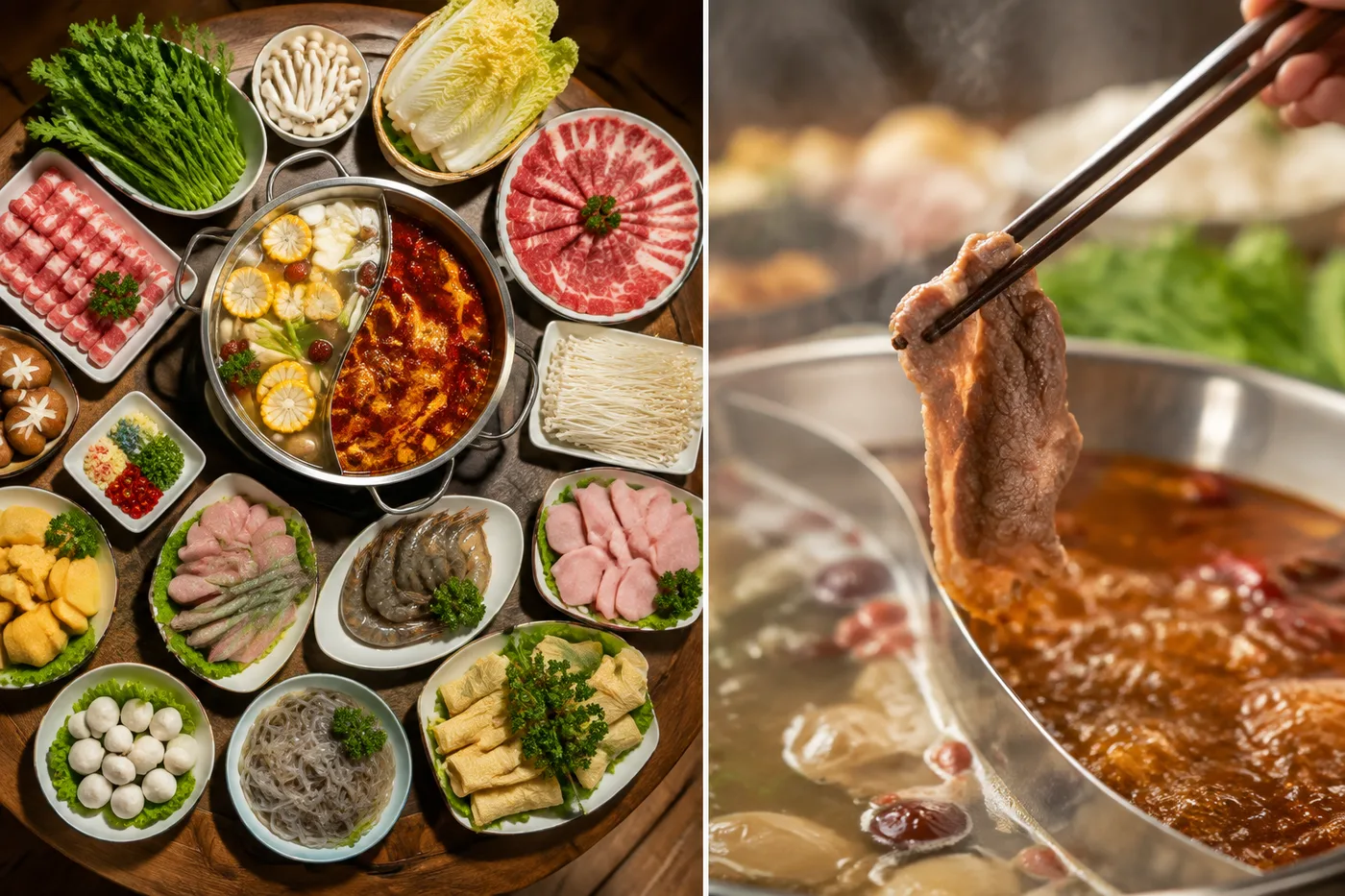
Most hot pot conversations start with spice. Chaoshan beef hot pot makes you forget spice exists. This is a style where a single pot of clear, barely-seasoned bone broth and the quality of one morning's slaughter determines whether the meal is transcendent or ordinary.
It is the most expensive, most technically demanding, and most quietly influential hot pot style in China.
Where It Comes From
Chaoshan (潮汕) is the cultural name for the Chaozhou-Shantou region of eastern Guangdong province — a coastal area with a distinct dialect, cuisine, and food philosophy that sets it apart from the rest of Cantonese cooking. Chaoshan people have historically been some of China's most successful traders, and their food reflects a culture of quality, precision, and not wasting what is excellent by disguising it with spice.
Chaoshan beef hot pot as a restaurant style became prominent nationally in China in the 2010s, when Chaoshan migrants opened dedicated restaurants in Shenzhen, Guangzhou, and Shanghai. Food media discovered it. The concept — ultra-fresh beef, minimal intervention, expert butchery — spread rapidly. Today it commands a significant premium over other hot pot styles in any Chinese city.
The Defining Principle: Same-Day Beef
The entire system is built around one rule: the beef must be slaughtered the same morning it is served. At authentic Chaoshan restaurants, this is not marketing — it is operational reality. Each restaurant has a contracted supplier. The animals are slaughtered in the early morning hours, the beef arrives at the restaurant before noon, the restaurant opens for dinner service only (so the beef is at most 8-12 hours old), and nothing is refrigerated overnight.
Fresh beef this close to slaughter behaves differently in the pot. It is more tender, more silky, and cooks at slightly lower temperatures than aged or refrigerated beef. The 3-5 second cooking time that defines this style only works because the beef is fresh enough to be nearly eaten raw.
Restaurants that use day-old or frozen beef and claim Chaoshan style are technically fraudulent — and experienced diners can tell immediately from the texture.
The Cuts: Butchery as a Profession
Chaoshan beef hot pot restaurants employ specialized butchers who train for years. The cuts served are precise and named:
吊龙 (diào lóng) — Hanging Dragon: Long muscle running along the spine. Lean, tender, with a thin ribbon of fat. The most prized cut for texture. Cook 3-5 seconds.
胸口捞 (xiōng kǒu lāo) — Brisket Flower: A fatty brisket section that melts slightly in the hot broth, releasing rich fat throughout the broth. 5-7 seconds. Intensely satisfying.
匙柄 (chí bǐng) — Spoon Handle: From the shoulder. More fibrous with marbling. Cook 7-10 seconds. More chew, more flavor.
牛肉丸 (niúròu wán) — Beef Meatballs: The most famous Chaoshan food export. Made by hand-pounding fresh beef for 30-60 minutes — the mechanical action aligns the protein fibers and creates a dense, springy texture that machine-made meatballs cannot replicate. Cook 3-4 minutes. Authentic ones bounce when dropped on a hard surface.
牛舌 (niú shé) — Beef Tongue: Thinly sliced. 5-8 seconds. Extremely tender with a distinctive clean beef flavor.
The Broth: Restraint as Philosophy
The broth is beef bone stock — simmered for 4-6 hours with ginger, green onion, and a few aromatics. It is seasoned lightly and kept deliberately mild. The goal is not to add flavor but to provide a hot, clean medium that finishes the beef cooking while adding a layer of bone mineral depth.
As you cook progressively more beef in it, the broth absorbs fat, protein, and flavor. By the end of the meal, the broth is rich, deeply savory, and worth drinking on its own — which is exactly what locals do. Some restaurants serve the end-of-meal broth with a beaten egg and noodles as a final course.
The Dipping Sauce: Sha-Cha and Egg
Sha-cha sauce (沙茶酱) with a raw egg yolk beaten in. This is the signature dip. Fu Chi brand from Taiwan is considered the benchmark for sha-cha sauce outside Chaoshan. Mix in a small bowl with soy sauce and optionally a little sugar to balance the saltiness.
The egg yolk has two functions: it binds the sauce to a silkier consistency, and the fat from the yolk mellows the intensity of the sha-cha. It is also slightly theatrical — breaking the yolk into the sauce bowl is part of the tableside ritual.
Do not use sesame paste or chili oil here. They would overpower the beef.
Why It Is the Most Expensive Style
Same-day beef sourcing at premium quality costs significantly more than refrigerated supply chains. Expert butchers command higher wages. Smaller portion sizes (each cut is served in modest quantities — this is precision, not stinginess). And dinner-only service (no lunch) means fixed costs spread across fewer covers.
A full Chaoshan beef hot pot for two in China costs ¥300–600 ($40–85 USD) at a respected restaurant. Outside China, it can easily reach $120–200 for two at the few dedicated restaurants in Singapore, Los Angeles, or Sydney that do it properly.
It is worth it, if you care about what premium beef tastes like at the edge of its freshness.
How to Find Authentic Chaoshan Hot Pot
In China, search Dianping (大众点评) for "潮汕牛肉火锅" in your city. Filter by score. In Shantou itself, the home city, options range from tiny family restaurants to upscale spots.
Outside China, the cities with the best Chaoshan hot pot scenes are Singapore, Kuala Lumpur, Los Angeles (San Gabriel Valley area), and Sydney. Search for "Chaoshan beef hot pot" or "chao shan niu rou." Quality varies enormously — ask whether they source same-day or next-day beef.
Frequently Asked Questions
Yes — it is arguably the most beginner-friendly hot pot style for flavor. No spice, no unusual offal (unless you order it), and familiar flavors. The challenge is understanding the speed required (3-5 seconds is very fast) and not overcooking. The experience is more refined and quieter than a Sichuan restaurant, making it less overwhelming for first-timers who are nervous about the hot pot format.
Hand-pounding fresh beef for 30+ minutes creates a highly organized protein network — the myosin proteins bond in an aligned structure that acts like a dense spring. The texture is denser than any machine-produced meatball. Factory versions use a different process that produces a similar shape but fundamentally different texture. At an authentic restaurant, ask the server — they will often show you a meatball being bounced as proof of quality.
You can make a version of it. The limiting factor is beef freshness — you will likely not have same-day slaughter access. Use the freshest, highest-quality beef you can source (a good butcher or Asian market with high turnover). Slice extremely thin (partially freeze the beef first to make slicing easier). Make a clean bone broth from scratch. Source sha-cha sauce from an Asian grocery. The result will not be restaurant-quality but it will be a genuine rendition of the style.
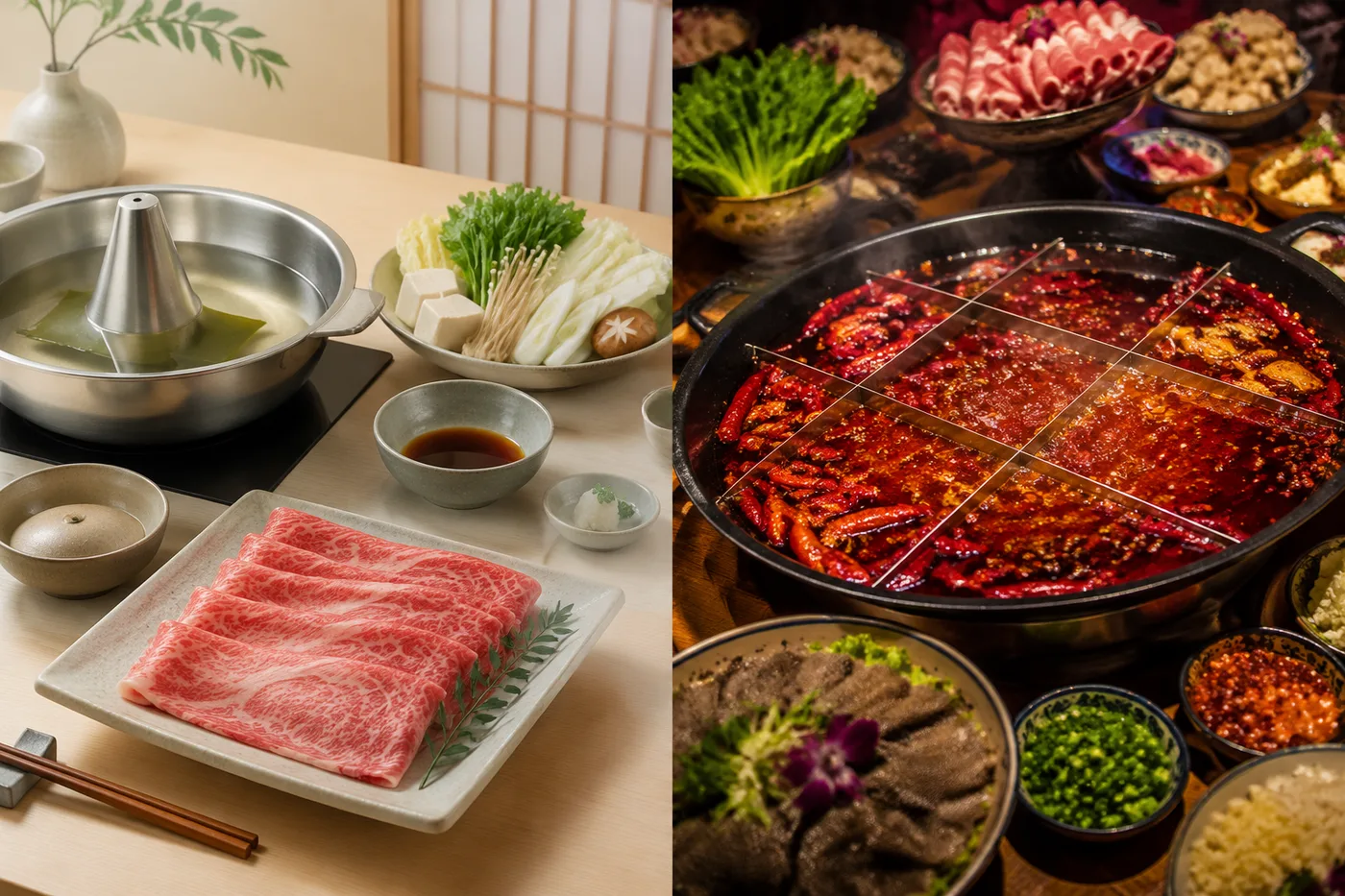
Both use thin beef in clear broth, but the philosophies differ. Shabu-shabu uses a wider range of ingredients and typically features ponzu or sesame dipping sauces. Chaoshan is exclusively beef (rarely other proteins), uses sha-cha sauce, and places far more emphasis on butchery — specific named cuts from a single animal are the point. Shabu-shabu is more about the communal cooking experience; Chaoshan is more about the beef itself as a premium ingredient.
Explore more hot pot styles: