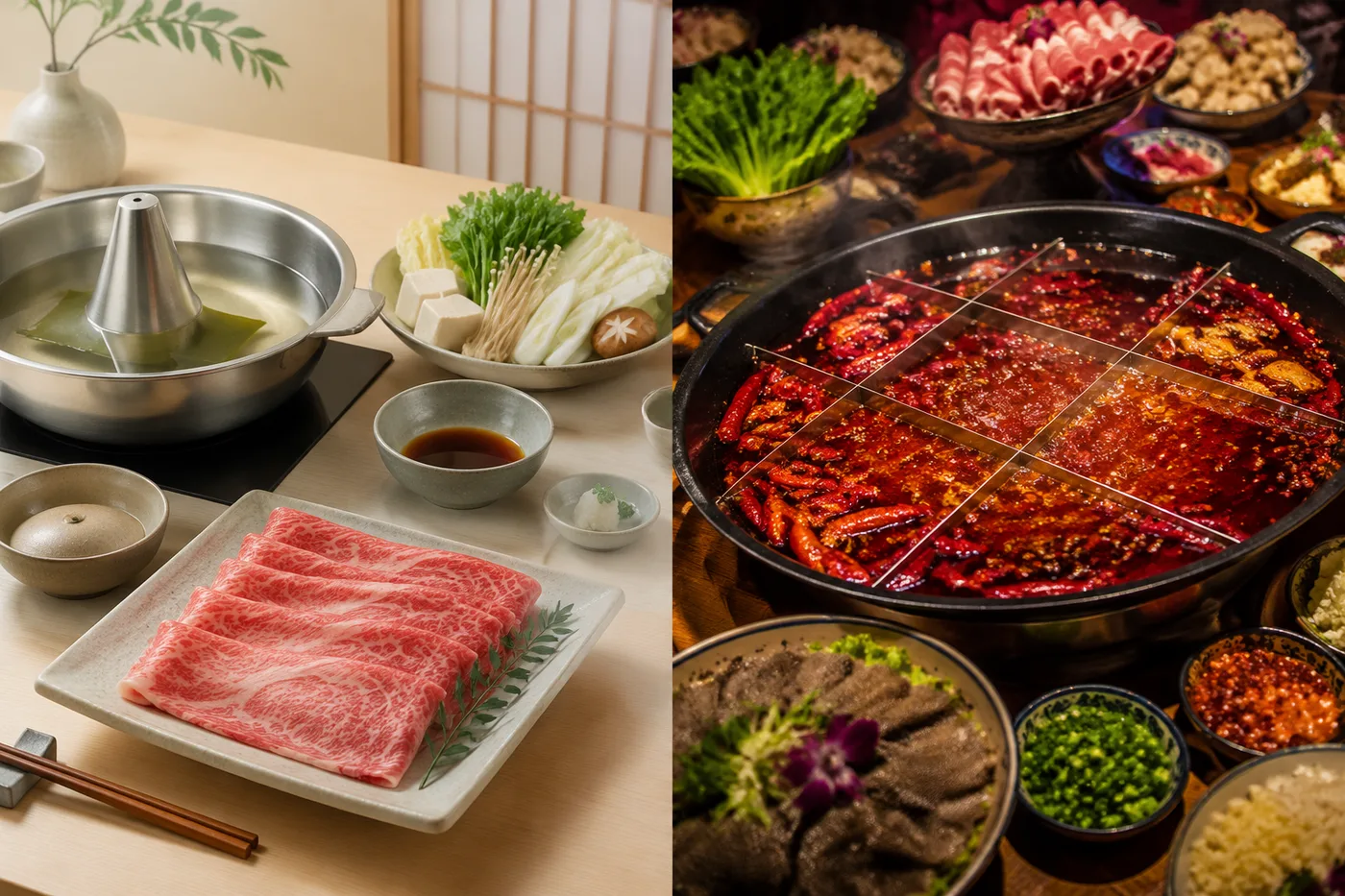
The broth gets all the attention, but experienced hot pot eaters know the dipping sauce is where the meal lives or dies. An overloaded sauce drowns every ingredient in the same flavor. The right sauce — calibrated to your style and your broth — amplifies everything you cook.
There are three distinct sauce systems in Chinese hot pot, each native to a different region. Most people outside China only know a vague version of one. Here is all three, with real ratios.
System 1: Sichuan Sesame Paste Sauce (Chengdu Style)
This is the sauce you will encounter at most Chinese hot pot restaurants globally. The base is Chinese sesame paste (芝麻酱, zhīma jiàng) — not tahini, not peanut butter. Chinese sesame paste is made from roasted sesame seeds and has a darker, more intense, slightly smoky flavor. The jar usually has separated oil on top — stir it before using.
The foundation ratio (per person):
- 2 tablespoons sesame paste (stirred)
- 1.5 tablespoons warm water or broth (thin it to pourable consistency — this is the most common mistake, people do not thin it enough)
- 1 tablespoon light soy sauce
- 0.5 tablespoon oyster sauce
- 1 teaspoon sesame oil
- 1 clove garlic, minced
From this base, customize with:
- Chili oil (辣椒油): 1-3 teaspoons — adds heat and red color
- Fermented tofu (腐乳): half a cube, mashed — adds funky, creamy depth (the Beijing signature addition)
- Raw egg yolk: beaten in — silkens the sauce and cools the heat slightly (a Chengdu tradition)
- Vinegar: a few drops of Chinkiang black vinegar — adds brightness
- Fresh cilantro and green onion: on top, for freshness
The condiment station at good hot pot restaurants stocks all of these. The ritual of building your sauce is part of the Chengdu hot pot experience — take your time.
System 2: Chongqing Sesame Oil Sauce
Minimalist by design. Chongqing locals use sesame oil because the broth is already doing all the work — a complex sauce would compete and dull the mala experience.
The ratio (per person):
- 2 tablespoons pure sesame oil (香油) — use high-quality roasted sesame oil, the fragrance matters
- 1 clove garlic, minced fine
- Optionally: 2 teaspoons chopped green onion
That is genuinely it. The sesame oil serves as a cool, fragrant buffer that coats the ingredient and calms the capsaicin slightly. When you retrieve a piece of maodu at exactly 7 seconds and dip it in this sauce, the combination is one of the defining bites of Chinese food.
Adding sesame paste to this sauce — which many non-Chongqing restaurants do — is considered a Chengdu habit by Chongqing purists. Neither is wrong. But if you want the authentic Chongqing experience, keep it to oil and garlic.
System 3: Chaoshan Sha-Cha Sauce
Sha-cha sauce (沙茶酱, shā chá jiàng) is one of the most complex condiments in Chinese cooking — a blend of dried seafood, garlic, shallots, chili, and spices from the Chaoshan region of Guangdong. It is the defining dipping sauce for Chaoshan beef hot pot and used nowhere else as a hot pot dip.
The ratio (per person):
- 1.5 tablespoons sha-cha sauce (Fu Chi brand is considered the standard — look for it at Asian supermarkets)
- 1 egg yolk (raw, beaten into the sauce — this is non-negotiable in authentic Chaoshan style)
- 1 tablespoon light soy sauce
- 0.5 teaspoon white sugar
- Optionally: fresh cilantro, thinly sliced green chili
This sauce is used specifically with ultra-fresh beef in clear broth. It would be overpowering with mala. Keep it for Chaoshan-style hot pot, or for dipping lightly-cooked proteins in any mild broth.
The Most Common Mistakes
1. Not thinning the sesame paste. Sesame paste straight from the jar is too thick to coat food properly. You need to add warm water or broth gradually, stirring constantly, until it is the consistency of heavy cream. Cold water causes it to seize.
2. Over-building the sauce. Adding every condiment available — chili, garlic, fermented tofu, egg, cilantro, sesame oil, vinegar — creates a muddy, clashing sauce where nothing stands out. Pick a primary flavor direction and build around it.
3. Rinsing cooked ingredients before dipping. Some people dip their food in a separate bowl of clean broth before the sauce to reduce spiciness. This is practical but washes away flavor. Instead, calibrate your broth spice level before ordering.
4. Using the same sauce for the whole meal. Your sauce changes as you use it — the broth you dip ingredients into dilutes it and enriches it. Taste your sauce halfway through and adjust. Many locals replenish and adjust their sauce during the meal.
Which Sauce Goes With Which Broth?
| Broth Style | Recommended Sauce |
|---|---|
| Sichuan mala | Sesame paste base (Chengdu system) |
| Chongqing bold | Sesame oil + garlic only |
| Chaoshan beef (clear) | Sha-cha sauce + egg yolk |
| Tomato / mushroom | Light soy + sesame oil + garlic |
| Coconut chicken | Local Hainan chili paste + soy sauce |
| Beijing copper pot | Sesame paste + fermented tofu + chive flower paste |
Frequently Asked Questions
In a pinch, yes — but the flavor is noticeably different. Chinese sesame paste uses roasted sesame seeds, giving it a deeper, smokier taste. Tahini (from raw or lightly toasted sesame) is lighter and more bitter. The result will be edible but not authentic. If you can find Chinese sesame paste at an Asian grocery, it is worth the trip.
This is a common question. In China, fresh eggs from reputable sources are routinely consumed raw in hot pot and other dishes. If you are concerned, use pasteurized eggs. The egg yolk serves to bind the sauce and mellow the sha-cha flavor — if you omit it, add a little extra soy sauce to compensate for the lost liquid.
Keep your sauce bowl near the pot (not on the table edge away from the heat source). You can also ladle a small amount of hot broth into your sauce bowl at the start of the meal — this warms the bowl and slightly enriches your sauce simultaneously.
Build your sauce interactively: