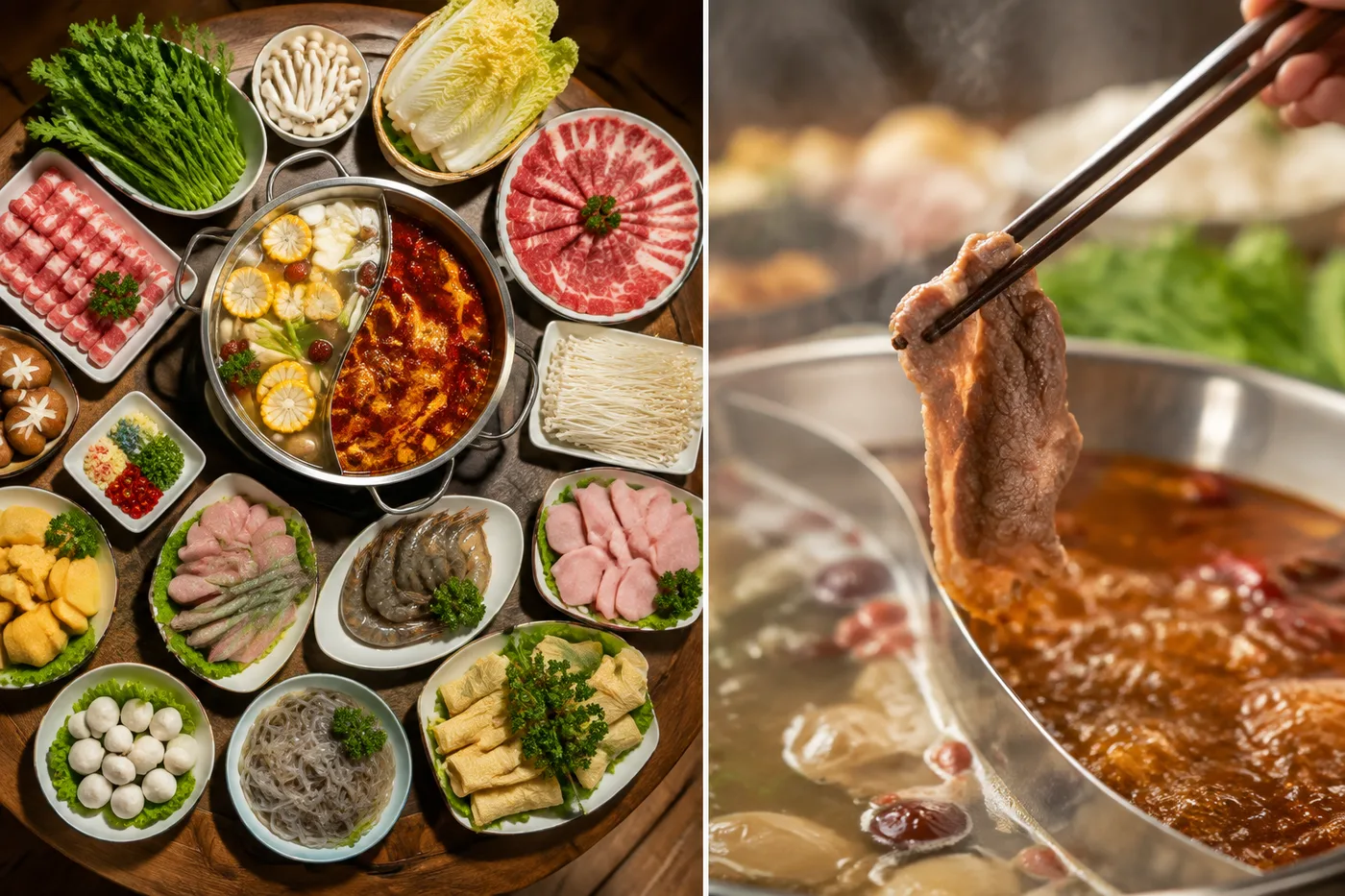
Leftover hot pot broth can be intensely useful: it has collected meat juices, mushroom savoriness, vegetable sweetness, starch, and spice. It can also contain heavy salt, surface fat, and contamination from raw-food utensils. Treat it as a perishable mixed dish, not a magical stock that improves forever. Safe cooling comes first; recipes only matter after that decision.
First Decide Whether the Broth Is Safe to Keep
Discard broth if it sat without heat for more than 2 hours at room temperature, or more than 1 hour in very hot conditions above 32°C or 90°F. Also discard it if diners repeatedly dipped raw-meat chopsticks into bowls, if anyone at the table was ill, or if you cannot say how long it remained in a safe hot or cold range. Boiling later does not reliably reverse every consequence of poor storage.
If the broth stayed simmering, strain it while hot into a clean pot. Bring it to a full boil, then cool it rapidly in shallow containers. Refrigerate within 2 hours. Use refrigerated broth within 3 days for a conservative household rule, or freeze it promptly. Reheat leftovers to 74°C or 165°F. People who are pregnant, older, immunocompromised, or serving very young children should be especially cautious with broth exposed to communal raw-meat handling; when uncertain, discard it. The leftover coach can organize the decision, but official local food-safety advice takes priority.
1. Next-Day Ginger Congee
Congee turns a strong but clean broth into a gentle breakfast. For two servings, combine 120 grams rinsed white rice with 750 milliliters strained mild broth and 250 milliliters water. Add 10 grams sliced ginger. Bring to a boil, reduce to a low simmer, and cook 45–60 minutes, stirring more often as the grains break down.
Thin with water when necessary because leftover broth may be salty. Finish with scallion and a small amount of sesame oil. Clear chicken, mushroom, tomato, and seafood broths work; an oily mala broth produces a much heavier result. Add cooked meat only during the final reheating and ensure it reaches a safe temperature.
2. A Fast Noodle Soup
For each bowl, dilute 400 milliliters strained broth with 100–200 milliliters water or unsalted stock. Bring it to a boil, add fresh noodles according to their package time, then top with a fully cooked egg, greens, scallion, and any safely stored cooked meat. If the noodles carry loose flour, boil them separately so the soup does not become gluey.
Taste before adding soy sauce. Broth that seemed balanced at the table may be too salty after chilling and reheating. A spoonful of black vinegar or fresh lime can brighten a rich soup without more salt. Never put yesterday’s cooked toppings on the finished bowl cold; reheat them thoroughly.
3. Braised Firm Tofu
Cut 400 grams firm tofu into 3-centimeter cubes and pat them dry. Brown the cubes in a lightly oiled pan, add 350 milliliters strained broth, and simmer uncovered for 12–15 minutes. Turn once so the tofu absorbs liquid evenly. Reduce only until the sauce lightly coats the pieces; very salty broth should be diluted before it enters the pan.
Mushroom, tomato, and moderate mala broth suit this method. Add napa cabbage or sliced mushrooms for the last 5 minutes. Do not use soft silken tofu unless you want a spoonable dish, because stirring will break it. Serve over fresh rice, not rice that has been stored unsafely.
4. Build a Ramen-Style Base
Hot pot broth already has the body that ramen cooks often build separately. Strain off peppercorns and debris, chill, then remove some solidified fat if the broth is excessively oily. Reheat 450 milliliters broth per bowl and dilute to taste. Add a small amount of tare—soy, miso, or salt seasoning—only after tasting.
Cook noodles separately, drain, and pour the boiling broth over them. Top with reheated cooked meat, corn, mushrooms, or a properly cooked egg. Mala broth can be excellent but powerful; blend one part mala with two or three parts unsalted stock rather than serving concentrated red oil as soup.
5. Thin a Sesame Dipping Sauce
A few spoonfuls of strained mild broth can loosen sesame paste, zhī ma jiàng (芝麻酱), without making it watery. Whisk 2 tablespoons sesame paste with 1 tablespoon boiling reheated broth, then add more by teaspoons until smooth. Finish with vinegar, garlic, scallion, or chili.
Only do this with broth that has been cooled and reheated safely. Make a small quantity and eat it immediately; do not return the thinned sauce to storage. Avoid using communal broth when cross-contact with allergens or raw foods is uncertain.
6. Freeze Concentrated Flavor Cubes
Strain and boil safe broth, then reduce it by one third to save freezer space. Cool rapidly and freeze in small food-safe containers or cube trays. Once solid, transfer cubes to a labeled freezer bag. Use within about 3 months for best quality. Freezing pauses microbial growth but does not repair broth that was mishandled before freezing.
One or two cubes can season stir-fried vegetables, noodle soup, braised cabbage, or a pan sauce. Because salt concentrates during reduction, add no extra seasoning until the cube has dissolved in the dish. Mala cubes also contain fat, so start small. If the refrigerator holds several unrelated remnants, use the fridge raid planner to match safe ingredients with the broth rather than mixing everything automatically.
What Not to Do With Leftover Broth
- Do not leave the full hot pot on the counter overnight.
- Do not cool several liters in one deep, sealed container; the center stays warm too long.
- Do not top old broth with fresh broth repeatedly across several meals.
- Do not assume a hard boil makes any history safe.
- Do not freeze broth after it has already spent several questionable days in the refrigerator.
For the next gathering, the planning advice in hot pot at home can reduce excess before it exists. Cook smaller batches, keep uncooked ingredients refrigerated, and add more only when the table needs them. Use the cooking-time guide so food leaves the broth when it is ready instead of becoming tomorrow’s overcooked remainder.
The Practical Rule
Keep broth only when you can describe its temperature history confidently. Strain it, cool it quickly, refrigerate for no more than 3 days, and reheat it thoroughly. Then choose a recipe that respects its concentration: dilute for soup, reduce carefully for braising, or freeze in small portions. Flavor is valuable, but it is never worth gambling on uncertain storage.