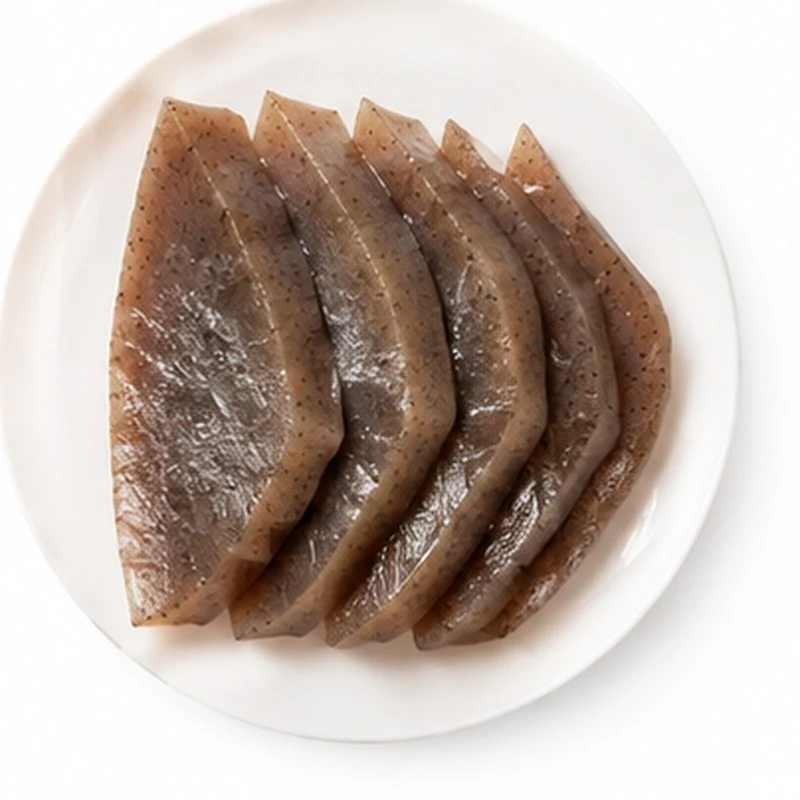
What Is Konjac (Shirataki)?
Konjac (also called konnyaku or devil's tongue) is made from konjac yam flour. It is nearly calorie-free, almost entirely composed of glucomannan fiber, and has a distinctive, slightly rubbery texture that divides opinion. Its neutral, slightly earthy flavor means it absorbs broth and sauce flavors well. In Chinese hot pot, it appears in sliced form (resembling thick noodles), in block form, or as decorative knotted shapes. Popular with diners watching their calorie intake.
Flavor & Texture
Flavor
Neutral to mildly earthy — pure broth-absorption vehicle
Texture
Firm, slightly rubbery, slippery — distinctive and satisfying or off-putting depending on preference
How to Cook Konjac (Shirataki) in Hot Pot
Add to boiling broth for 2-3 minutes. Konjac absorbs flavours more slowly than other ingredients — longer time in the pot is better.
Best Broths to Pair With
Recommended Dipping Sauce
Bold sauces are necessary — konjac has almost no flavour of its own. Spicy mala sauce or sesame-garlic gives it the character it lacks.
Substitutes & Alternatives
Frozen tofu (similar spongy absorption quality with more substance). Glass noodles for konjac noodle substitution. Silken tofu for a comparable delicate texture.
Common Mistakes to Avoid
- Expecting flavour from the konjac itself — it contributes only texture, not taste
- Adding to mild clear broth — it will absorb little interesting flavour
- Using Japanese konnyaku directly from Asian supermarkets — some varieties need a brief parboil to remove alkaline taste before hot pot use
Regional Styles That Feature This
Frequently Asked Questions
What is konjac made from?
Konjac is made from glucomannan, a water-soluble dietary fibre extracted from the konjac plant (Amorphophallus konjac). It is nearly calorie-free (about 10 calories per 100g) and is valued in Chinese cooking for its unique texture and ability to absorb flavours.